Bookkeeping Basics Every Small Business Owner Must Get Right
Bookkeeping is not about spreadsheets for the taxman. It is the operating system of your business — the habits that protect your cash, reduce audit risk, and give you numbers you can actually run decisions from as a founder-led business owner.

Bookkeeping is not the most glamorous topic in business. It does not make headlines, it does not feature in founder podcasts, and it rarely comes up in conversations about growth strategy. But it is, without question, one of the most consequential disciplines in any small business — and the owners who get it wrong pay a disproportionate price, usually at the worst possible moment.
Think of bookkeeping as the operating system of your business. If it is clean and reliable, everything else — pricing, hiring, funding, tax, even your own stress levels — runs more smoothly. If it is messy, slow, or full of errors, you end up running a bigger, busier version of the same fragile business, constantly firefighting and always vaguely worried about what the numbers will show when someone finally looks closely.
This guide covers the fundamentals every small business owner in the US and UK needs to understand — not because bookkeeping is complicated, but because the cost of getting it wrong is far higher than the effort of getting it right.
Bookkeeping is the process of recording, organising, and managing financial transactions for your business. It is the foundation of your financial house — everything else, from tax compliance to investor reporting to strategic decision-making, is built on top of it. Without accurate books, you cannot understand where your money is going, you cannot prepare for a tax audit, and you cannot make informed business decisions.
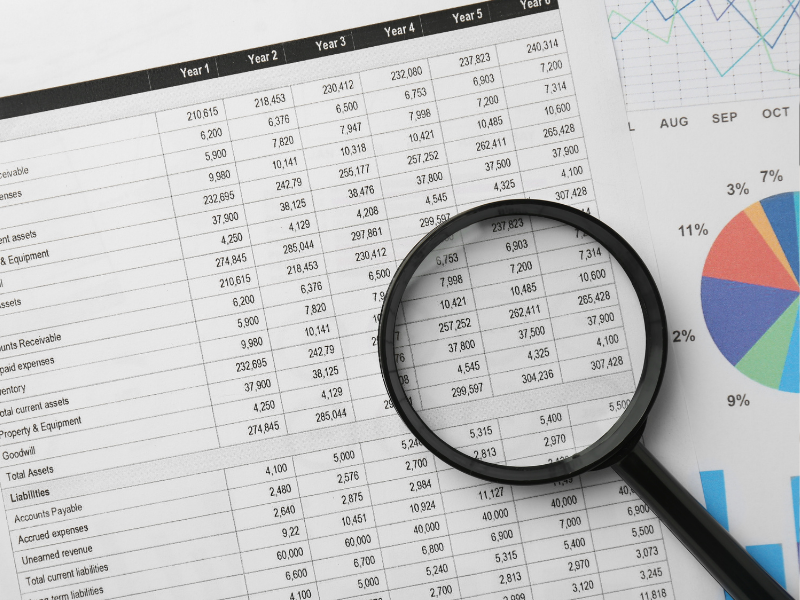
The key distinction to understand is the difference between bookkeeping and accounting. Bookkeeping is the systematic recording of transactions — every sale, every purchase, every payroll run, every bank transfer. Accounting is the higher-level interpretation and analysis of that data — financial statements, tax strategy, budgeting, and reporting. You need both, but bookkeeping is the prerequisite.
A useful mental shift is this: bookkeeping is not something you “do for HMRC or the IRS.” It is something you do for yourself as a business owner, so you can see clearly whether your effort is actually turning into profit, cash, and a business you can one day step back from. Regulators, banks, and investors simply benefit from the system you have already built for your own decision-making.
The Foundational Rule: Separate Everything
The single most important bookkeeping principle for any small business owner is also the simplest: keep your business and personal finances completely separate. Open a dedicated business bank account and a business credit or debit card. Never use personal accounts for business transactions, and never use business accounts for personal expenditure.
This is not merely an administrative preference. In the US, commingling personal and business funds can pierce the corporate veil — exposing shareholders to personal liability for business debts. In the UK, it creates serious complications for HMRC self-assessment, VAT returns, and Companies House obligations. And for any business seeking external investment or financing, mixed accounts are an immediate red flag that signals financial immaturity.
The separation principle extends to expenses. Every business expense — software subscriptions, travel, client entertainment, equipment — should flow through your business accounts. This makes tax preparation dramatically simpler, reduces audit risk, and creates the clean financial records that lenders and investors need to see.
A separate business account is not just a “nice to have”; it is a low-cost form of risk protection and credibility. Mixed accounts do not just make life harder at year-end — they increase the chances of paying too much tax, missing allowable deductions, or being pulled into an audit you could have avoided. UK research shows that careless VAT errors can attract penalties of up to 30% of the tax at stake, and deliberate errors can be penalised at 100%, which is a very expensive way to learn that mixing expenses is not worth the convenience.
Choose Your Bookkeeping Method
There are two fundamental accounting methods: cash accounting and accrual accounting. Understanding the difference is essential for any business owner.
Cash accounting records income when money is received and expenses when they are paid. It is simpler, gives a real-time picture of your cash position, and is widely used by small businesses and sole traders. In the UK, most businesses with turnover below £150,000 can use cash accounting for their tax return. In the US, the IRS generally allows cash accounting for businesses with average annual gross receipts below $26 million.
Accrual accounting records income when it is earned — regardless of when payment is received — and expenses when they are incurred, regardless of when payment is made. It gives a more accurate picture of long-term financial performance and is required by GAAP (Generally Accepted Accounting Principles) in the US and IFRS (International Financial Reporting Standards) in the UK for larger businesses. Most investors and lenders expect to see accrual-basis financial statements.
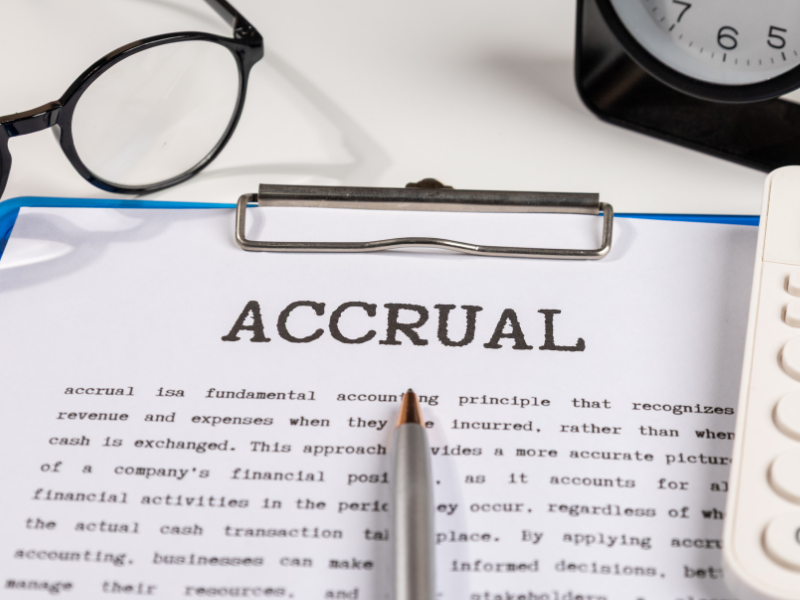
For most small businesses in the early stages, starting with cash accounting and transitioning to accrual as the business grows is a pragmatic approach. The critical point is to choose one method, apply it consistently, and understand its implications.
A helpful way to decide is to ask: “Do I mainly need to understand today’s cash, or am I starting to manage bigger commitments over time?” If you are running on short payment terms and simple projects, cash accounting may be enough. As soon as you are signing longer projects, subscriptions, or inventory-heavy models, accrual becomes less about compliance and more about not lying to yourself about how healthy the business really is.
Record Every Transaction — Without Exception
The cardinal rule of bookkeeping is that every financial transaction must be recorded. Every sale, every refund, every bank transfer, every supplier invoice, every expense receipt. The most common bookkeeping failure in small businesses is allowing transactions to go unrecorded — usually because they seem too small to matter, or because the owner is too busy to log them in the moment.
This creates two problems. First, your financial records become inaccurate — which means any decisions made on the basis of those records are potentially flawed. Second, unrecorded transactions create reconciliation nightmares at tax time, when small discrepancies compound into significant problems. The discipline of recording everything in real time — or at minimum, weekly — is the single habit that most separates businesses with clean books from those in perpetual financial chaos.
Modern bookkeeping software makes this dramatically easier. Most platforms can automatically log income and expenses from linked bank accounts, reducing manual data entry to a minimum. The question is not whether to use software — it is which software to use.
A small but painful example: if you “forget” to record $1,000 of legitimate expenses in a year, your profit looks $1,000 higher than it really was. Depending on your tax rate, that can mean paying an extra $200–$400 in tax you did not need to pay — purely because the bookkeeping was incomplete. Multiply that by several missed items and you can see why sloppy records quietly eat into your after-tax income.
The Essential Bookkeeping Tasks
Bank reconciliation is the process of comparing your bookkeeping records against your actual bank statements to identify discrepancies. It should be performed monthly, at minimum — weekly for higher-volume businesses. Unreconciled books are a reliable indicator of financial chaos, and the longer reconciliation is deferred, the more time-consuming and error-prone it becomes.
Accounts receivable management means tracking who owes you money, how much, and for how long. Many small businesses have receivables problems masquerading as cash flow problems — they are profitable on paper but consistently short of cash because they are slow to invoice, slow to follow up on outstanding payments, or overly generous with credit terms. A basic accounts receivable aging report — showing outstanding invoices grouped by how long they have been outstanding — is a fundamental bookkeeping output that every business owner should review monthly.
Accounts payable management is the mirror image: tracking what you owe to suppliers and when it is due. Late payments damage supplier relationships and can attract penalty charges. But paying early when cash is tight is equally damaging. Good accounts payable management means paying on time — not early, not late — and maintaining the supplier relationships that underpin your operational resilience.
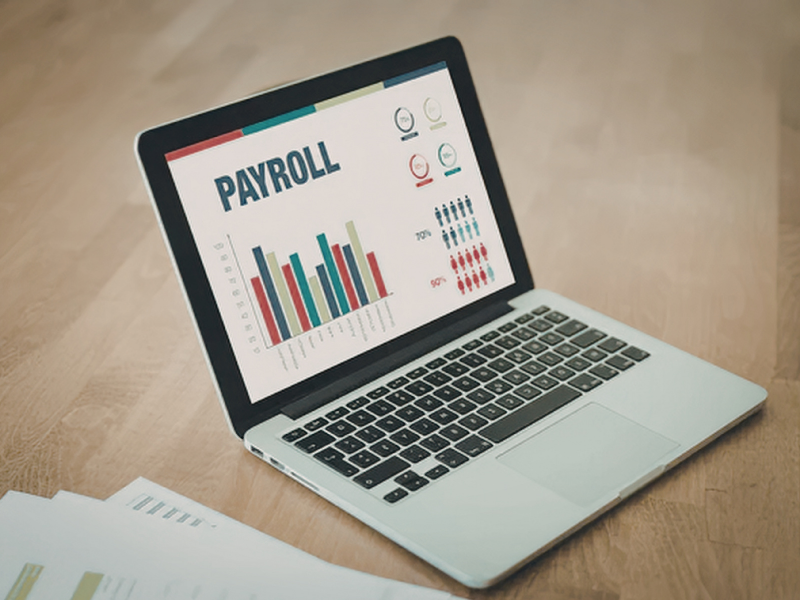
Payroll records must be meticulously maintained in both the US and UK. In the US, this includes federal and state payroll tax filings, W-2 and 1099 records, and compliance with FLSA requirements on wages and hours. In the UK, it includes PAYE submissions to HMRC, National Insurance contributions, and compliance with the National Living Wage and National Minimum Wage requirements. Payroll errors are among the most expensive bookkeeping mistakes a small business can make — both in terms of financial penalties and employee relations.
All of these tasks are not just “back-office admin.” They are how you protect cash, protect relationships, and protect your future self. Clean receivables and payables mean fewer 2 a.m. “Can I make payroll?” moments. Regular bank reconciliation means you are the first to spot fraud or bank errors, not your accountant months later. Good payroll records mean you can answer any employee or tax enquiry calmly instead of scrambling through old emails.
The Three Financial Statements You Must Understand
Bookkeeping data feeds into three core financial statements that every business owner needs to be able to read and interpret:
The Income Statement (Profit and Loss) shows revenue, cost of goods sold, operating expenses, and net profit or loss over a defined period. It tells you whether your business is profitable.
The Balance Sheet shows what your business owns (assets), what it owes (liabilities), and the resulting equity at a single point in time. It tells you the financial position of your business at any given moment.
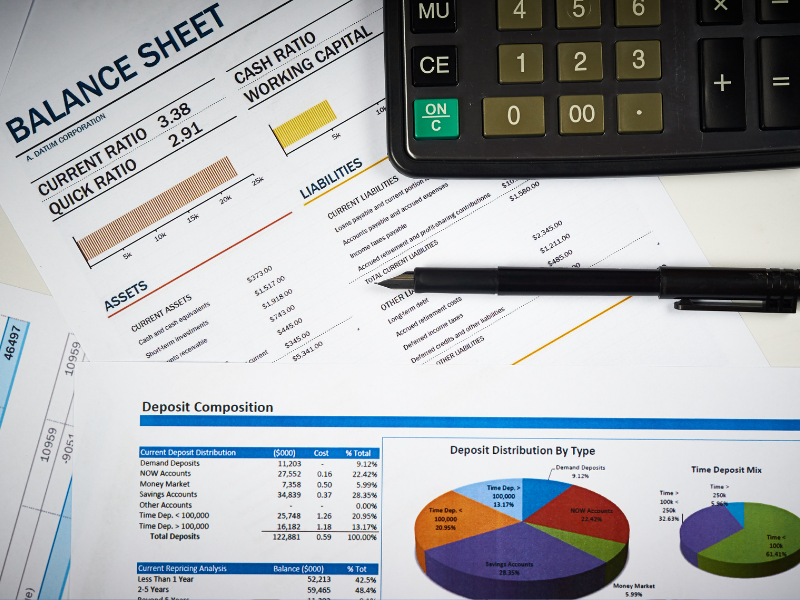
The Cash Flow Statement shows the actual movement of cash into and out of your business, categorised by operating, investing, and financing activities. It is the most honest financial statement — a business can show profit on the income statement while running out of cash, and the cash flow statement reveals why.
Most small businesses produce the income statement regularly but neglect the balance sheet and cash flow statement. This is a mistake. The combination of all three gives a complete picture of financial health that no single statement provides on its own.
A useful rule of thumb is: the profit and loss speaks to your ego, the cash flow speaks to your stress levels, and the balance sheet speaks to your long-term wealth. You need all three voices. Investors, lenders, and potential buyers will always look beyond “Are you profitable?” to “How strong is your balance sheet?” and “How well do you manage cash?” Robust bookkeeping is what makes those answers credible instead of hopeful.
In the US, small business owners must understand federal and state income tax obligations, self-employment tax, quarterly estimated tax payments, sales tax where applicable, and payroll tax if they have employees. The tax code is complex and changes frequently — the investment in a qualified CPA who specialises in small business taxation pays for itself many times over.
In the UK, the key obligations for limited companies include Corporation Tax (paid to HMRC on annual profits), VAT (if turnover exceeds the £90,000 registration threshold), PAYE (for employed staff), and Making Tax Digital — the HMRC initiative requiring businesses to maintain digital records and submit tax information electronically. Sole traders and partnerships have Self Assessment obligations. The penalties for late or inaccurate filings in the UK can be substantial — particularly for VAT, where surcharges compound with each subsequent failure.
From a mindset perspective, good bookkeeping is your best tax insurance policy. It does not guarantee you will never be audited — the IRS audits a small share of small businesses each year, and HMRC carries out enquiries where risks are flagged — but it dramatically reduces the chances that an enquiry turns into a costly, time-consuming problem. Accurate records, clear separation of expenses, and reconciled accounts are some of the strongest signals that you are running a real business, not a hobby or a side hustle with messy books.
For the vast majority of small businesses, manual bookkeeping in spreadsheets is neither efficient nor reliable beyond a very early stage. Cloud-based bookkeeping software has transformed small business financial management — reducing manual data entry, automating bank reconciliation, and providing real-time financial visibility at a cost that is accessible to almost any business.
The leading platforms for US and UK small businesses include QuickBooks Online, Xero, FreshBooks, and Wave. QuickBooks is the most widely used in the US, with deep integration into the US tax ecosystem, including TurboTax and most US lenders. Xero is particularly popular in the UK and among internationally mobile businesses, with a user-friendly interface and an extensive app marketplace. FreshBooks is well suited to service-based businesses with straightforward invoicing needs. Wave is free for core accounting features and a practical option for very lean early-stage businesses.
The best software is the one you will actually use consistently — not the most feature-rich, but the one that fits your workflow and encourages the daily discipline of accurate record-keeping.
A practical way to decide is to ask: “Will this tool make it easier for me to keep my books up to date weekly?” If the answer is yes, it is worth paying for. If the answer is “only once a quarter when I have time,” it will become another dusty subscription. For most founder-led businesses, the real payoff is not the fancy dashboard; it is the fact that your numbers are finally current enough to run the business from, not just to tidy up at year-end.
Bookkeeping as a strategic habit
Bookkeeping will probably never be your favourite part of running a business. But it does not have to be a constant source of guilt or low-level panic either. When you separate finances properly, choose a method that matches your stage, record everything, stay on top of core tasks, and use simple software, bookkeeping shifts from a chore into a weekly habit that quietly protects your cash, your time, and your future options.
For founder-led businesses, that is the real win: you are no longer guessing, hoping, or dreading what the numbers might show. You are running the business from numbers you trust — which makes you a calmer leader, a stronger decision-maker, and a much more credible partner for any investor, lender, or buyer you choose to bring into your journey.