A Guide to Enhancing Governance in Your Founder-Led Business (Without the Corporate Jargon)
Governance is not just for big corporates. This guide shows founder-led businesses how to build simple, stage-appropriate structures for clearer decisions, stronger financial discipline, better risk management and a company that keeps running smoothly even when the founder is not in the room.

Governance is one of those words that makes many founder-led business owners mentally switch off. It sounds like something built for listed companies, formal boards, and thick policy manuals — not for a business owner trying to grow revenue, manage cash, lead a team, and keep operations moving.
But good governance is not corporate theatre. In a founder-led business, it is the practical system that helps you make better decisions, create accountability, reduce avoidable risk, and build a business that is more resilient, more sustainable, and easier to grow over time.
That matters for performance as much as protection. IFC notes that well-governed companies tend to deliver better long-term financial results, grow faster and more sustainably, operate more efficiently, and are better protected against mismanagement and risk. In other words, governance is not just about being “investor-ready.” It is part of building a business that lasts.
It also matters personally. Many founder-led businesses are still heavily dependent on the founder’s memory, approvals, judgement, and constant presence. That creates a level of background anxiety that often goes unspoken: if you were ill, travelling, or offline for two or three weeks, would the business still run smoothly? Mental Health UK has reported that four in five small business owners experience common symptoms of poor mental health at least a few times a year, including anxiety and disrupted sleep, while separate UK small-business research found that half of owners believed the stress of managing business finances had harmed their mental health. Good governance does not remove pressure entirely, but it does reduce one of the biggest hidden sources of founder stress: the fear that the business cannot function properly without you in the room.
This guide is designed for founder-led businesses, not large corporates. It shows how governance should evolve in stages, with each stage building on the previous one, so you can strengthen the business without creating bureaucracy for its own sake.
What governance actually means in a founder-led business
In plain English, governance is how your business is directed, controlled, and kept accountable. In practice, that means three things: who makes which decisions, how performance and risk are reviewed, and how key stakeholders get enough visibility to trust that the business is being run properly.
Done badly, governance feels like admin. Done well, it gives you clearer decision-making, fewer avoidable surprises, stronger financial discipline, better team accountability, and a business that is less dependent on one person remembering and approving everything.
It is also worth separating governance from compliance. Compliance is about meeting legal and regulatory requirements. Governance is broader: it is the operating discipline and accountability structure that helps the business perform well and keep performing well as it grows.
Why this matters earlier than most founders think
Many founder-led businesses delay governance because it feels like something for later — after the next hire, after the next revenue milestone, after the next funding round. In reality, the absence of simple governance habits usually shows up much earlier in unclear decision rights, inconsistent reporting, informal people management, founder bottlenecks, weak financial controls, and reactive handling of risk.

Those issues often stay hidden while momentum is strong. Then a cash squeeze, team issue, co-founder disagreement, operational mistake, or due diligence request exposes how much of the business still depends on one person holding everything together. The World Bank and IFC governance framework for SMEs argues that governance should help a company succeed at its current stage while creating the conditions to move successfully to the next one, because weak management and governance are closely tied to early-stage business failure.
That is why governance should be built progressively. You do not need a heavy structure from day one, but you do need core disciplines early — especially around legal basics, budgets, reporting, meeting rhythm, financial controls, risk visibility, and continuity planning.
Stage 1: Early growth — build the operating discipline
At this stage, governance should focus on the basics that make the business more controlled, less reactive, and easier to run. This is where many founder-led businesses need the most support, because the business has usually outgrown informality but has not yet built real operating discipline.
1. Get the legal and structural basics in place
Before anything else, make sure the business is properly set up and documented. That includes:
- Incorporation documents and statutory filings being up to date
- Shareholder agreements signed and stored properly
- Founder agreements signed, especially where responsibilities, equity, and vesting need clarity
- Employment contracts or contractor agreements in place for team members
- IP assignment provisions where relevant, so the business clearly owns what is being created.
This is not glamorous work, but it matters. Missing or unsigned core documents create confusion, weaken your legal position, and become serious problems when funding, debt, disputes, or sale discussions begin.
2. Separate personal and business finances fully
One of the most common early governance failures is blurred financial boundaries. The business should have its own bank accounts, cards, accounting records, and payment processes, with owner drawings or salary treated clearly and consistently.
This is about more than bookkeeping hygiene. When personal and business finances are mixed, cash visibility gets distorted, tax and legal exposure increase, and it becomes much harder to trust your numbers.

3. Put in a basic budget and budget-versus-actual discipline
A budget is a governance tool, not just a finance exercise. Even a simple 12-month budget gives you a baseline for what the business expects to earn, spend, and preserve in cash.
From there, introduce a monthly budget-versus-actual review. That means looking at what actually happened against what was planned and asking a few practical questions: where are we ahead or behind, what caused the gap, is this a one-off or a trend, and what decisions do we need to make now?
This discipline is foundational because it turns finance into a decision-making tool. It also helps you spot margin and cash issues much earlier, which reduces panic and improves control.
4. Create a simple monthly founder-team meeting rhythm
Governance is not only about documents; it is also about cadence. A monthly founder-team or leadership meeting should exist even in a small business, as soon as there is at least a small team helping run operations.
This meeting should include:
- A recurring agenda
- Financial review, including budget versus actual
- Key operational updates
- Risks and issues
- Decisions required
- Action items, owners, and deadlines
- Minutes or written notes recording what was decided.
This one habit improves accountability quickly. It also reduces the “everything lives in my head” problem that traps many founder-led businesses in reactive growth.

5. Define decision rights early
Founders often assume decision-making is obvious until a disagreement, delay, or costly mistake proves otherwise. A simple decision-rights matrix should clarify which decisions the founder can make alone, which require co-founder discussion, which should involve the team, and which require outside advice.
Start with recurring decisions such as hiring, pricing changes, supplier contracts, exceptional discounts, marketing spend, software purchases, and taking on debt. Even a one-page version creates more clarity than leaving it informal.
6. Introduce basic financial controls
Even a small founder-led business needs basic control over money movement. At minimum, this should include clear spend approval limits, a process for authorising payments, monthly bank reconciliations, review of unusual expenses, and some separation between the person initiating and approving payments where possible.

These controls reduce errors, lower fraud risk, and make your numbers more reliable. They also strengthen trust in the business when external stakeholders eventually review how you operate.
7. Start a simple risk register
A risk register should begin earlier than most founders think. It does not need to be complicated. At Stage 1, a one-page register covering your top operational, financial, legal, technology, and people risks is enough.
Examples might include customer concentration, founder dependency, cash runway pressure, lack of signed contracts, data loss, key supplier reliance, or compliance gaps. For each risk, note likelihood, impact, owner, and the main mitigation action.
8. Put a basic code of conduct in writing
Culture is part of governance. A short, plain-English code of conduct sets expectations around behaviour, integrity, confidentiality, use of company resources, and how concerns should be raised.
This becomes more important as soon as you have a small team, because culture can no longer rely purely on founder presence and informal norms.
9. Create a simple founder absence and business continuity plan
One of the most practical governance questions a founder-led business can answer is this: what happens if the founder is unavailable for more than a few days? The World Bank/IFC SME governance framework highlights key-person risk and business continuity planning for the CEO and other key people as important governance practices as companies grow.
At Stage 1, this does not need to be elaborate, but it does need to be written down. Your plan should cover:
- Who makes day-to-day operating decisions if you are ill, travelling, or offline
- Who approves payments, payroll, refunds, discounts, or urgent supplier issues
- Which decisions can wait until you return and which cannot
- Where key information is stored, including banking contacts, accountant details, legal documents, key passwords, and major customer or supplier contacts
- Who communicates with staff, customers, or partners if an issue arises.
Even a one-page continuity plan reduces fragility significantly. More importantly, it reduces the low-grade founder anxiety that comes from knowing the business still relies too heavily on your availability.
10. Consider a light advisory layer
At Stage 1, this does not need to be a formal board. A small advisory group, mentor, accountant, or experienced operator who reviews performance with you quarterly can provide perspective and challenge that founder-led businesses rarely get internally.
The point is not ceremony. The point is to create a regular moment where someone asks the difficult questions, tests assumptions, and helps you think more clearly about what comes next.

Stage 2: Established growth — formalise what is working
At this stage, all Stage 1 practices should stay in place. The goal now is not to replace them, but to formalise them, improve consistency, and add more oversight as the business becomes more complex.
This stage matters most for founder-led businesses with growing teams, higher revenue, external capital ambitions, greater operational complexity, or founder bottlenecks that are beginning to slow scale. It is also where weak governance starts to become expensive.
1. Tighten the quality of monthly reporting
Move beyond a basic review of sales and cash in the bank. Monthly reporting should now include profit and loss, balance sheet, cash flow or runway tracking, budget versus actual with commentary, a small set of core KPIs, and a short narrative explaining major movements, concerns, and actions.
This does not need to become corporate reporting, but it should become more complete and more decision-useful. A strong monthly reporting pack makes leadership discussions sharper and reduces ambiguity.
2. Formalise meeting governance
Your monthly founder-team meeting should now become more structured. That means a set meeting date each month, agenda circulated in advance, standing sections for financials, operations, people, risk, and key decisions, documented minutes, and review of prior actions at the next meeting.
At this stage, many founder-led businesses also benefit from a separate quarterly strategic review meeting focused less on operations and more on direction, capacity, hiring, major risks, and the next 6–12 months.
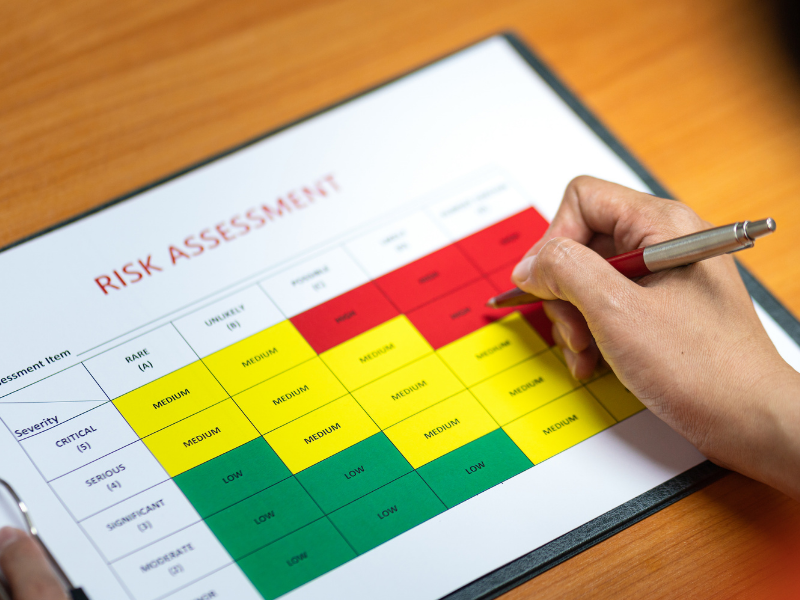
3. Strengthen the risk register and actually review it
A risk register only matters if it is used. In Stage 2, it should become a standing part of monthly or quarterly governance discussions.
Broaden it to cover financial, legal, people, operational, commercial, cyber, and reputational risks where relevant. This helps the business stop treating risk as an occasional worry and start treating it as a management responsibility.
4. Build a delegation of authority matrix
As the team grows, governance requires more than founder approval on everything. A delegation of authority matrix sets clear approval levels by role and category, such as hiring, spend, contracts, pricing exceptions, refunds, and supplier commitments.
This is one of the simplest ways to reduce founder bottlenecks without losing control. It also gives managers clarity and creates better accountability because people know both their authority and their limits.
5. Review shareholder, founder, and employment documentation
What was good enough at Stage 1 may no longer be fit for purpose. At Stage 2, revisit and update shareholder agreements, founder role definitions, employment contracts for senior hires, incentive structures where relevant, confidentiality clauses, IP protections, and people policies around conduct, grievances, and disciplinary matters.
This is especially important if the team has grown quickly, ownership has shifted, or senior roles have changed materially since the original documents were drafted.
6. Add independent perspective more intentionally
This is often the right stage to introduce a more formal non-executive advisor, independent board member, or governance mentor. Founder-led businesses at this point benefit from someone who can challenge constructively, bring outside pattern recognition, and create accountability around decisions that are easy to delay.
That person should not just be a prestigious name. They should understand operating businesses and be willing to engage with the real issues inside yours.
7. Create a conflict-of-interest approach
As the business grows, related-party arrangements and conflicts become more likely. A simple process should exist for declaring, documenting, and managing conflicts involving founders, directors, or senior team members.
This protects trust inside the business and strengthens credibility with external stakeholders. It also prevents awkward situations from quietly becoming larger governance problems later.
8. Improve people governance
Good governance includes how people are led and managed. By this stage, founder-led businesses should move beyond informal culture and introduce clearer structures around role clarity, performance expectations, manager accountability, conduct standards, and routes for raising serious concerns.
This is often overlooked because it sits between HR and governance, but it has a direct effect on execution quality, risk, and team trust.
9. Formalise decision cover when the founder is absent
By Stage 2, absence planning should move beyond an emergency document and become an operating norm. The business should have clear delegated authority for short founder absences, such as illness, travel, or annual leave, so routine decisions do not stall.
That means documenting:
- Who acts as decision-maker in your absence
- Which financial approvals can be made without you and up to what limit
- Which client, people, legal, or operational matters must be escalated
- How and when you are updated if you are partially available
- What the team should do if two senior people are unavailable at the same time.
This is a major step in moving from founder dependency to sustainable leadership. It helps the business run more smoothly, helps the team grow in confidence, and gives you evidence that the company can function without constant intervention.
Stage 3: Scaling maturity — add structured oversight
Stage 3 builds on everything from Stages 1 and 2. At this point, governance needs to support scale, more complex stakeholder relationships, and preparation for institutional capital, significant debt, acquisition, succession, or leadership transition.
1. Introduce board or committee structure where justified
This is the stage where formal boards and committees may start to make sense. Depending on size and complexity, that could include audit and risk oversight, remuneration discussions, or nomination and succession planning.
These structures should only be added where they improve oversight and decision quality. They should not be introduced simply to imitate larger companies.
2. Deepen financial assurance
At this stage, governance often requires better quality external assurance, more robust internal controls, tighter forecasting, and stronger board-level reporting.
This matters because the cost of bad information rises as the business scales. More stakeholders are relying on your numbers, and the consequences of weak controls become more serious.
3. Formalise succession and key-person planning
Founder dependency is one of the biggest long-term governance risks in a founder-led business. By Stage 3, succession planning should be active, not theoretical.
That includes contingency plans for temporary absence, identification of potential successors for key roles, and practical thought about how the business would keep operating if the founder stepped back unexpectedly.

4. Expand governance into long-term resilience
At greater scale, governance should increasingly support durability as well as performance. Depending on the business, this may include more formal policy architecture, data governance, cyber oversight, ESG expectations from lenders or investors, and stronger stakeholder communication rhythms.
Not every founder-led business needs all of these immediately, but this is the stage where governance becomes a genuine strategic asset, not just a control function.
What good governance is not
Good governance is not endless paperwork. It is not a slower business. And it is not a performative set of templates created only to satisfy investors, lenders, or due diligence processes.
For a founder-led business, good governance is practical: a budget that gets reviewed, meetings that produce decisions, agreements that are actually signed, controls that protect cash, risks that are visible, and a business that can keep operating even when the founder is unavailable.
That is what makes governance valuable. It gives structure to growth, reduces preventable chaos, lowers founder anxiety, and helps the business become more resilient, sustainable, and easier to lead for the long term.
Download the Starter Governance Checklist for Founders
If this article has shown you where the gaps might be, the Starter Governance Checklist for Founders can help you to start to enhance governance within your business. It is designed for founder-led businesses that want simple structures to make better decisions, reduce avoidable risk, and build a business investors, partners, and your future self can trust.
Use this checklist to assess where your governance basics stand today — from decision-making and financial discipline to people, risk, and legal foundations — and identify exactly where you need to strengthen them next. It is a practical starting point for putting real governance in place long before any funder walks through the door. Download it here: Starter Governance Checklist.