The 5 Financial Statements & Reports Every Founder Must Understand Before Their Next Investor Meeting
Know your P&L, balance sheet, cash flow, KPIs and board pack so you can walk into every investor meeting calm, clear and investor-ready.

If you’re like most founders I work with, “send us your numbers” is one of the most stressful sentences an investor can say.
As a finance and governance professional (I’m a chartered accountant with 12 years in corporate audit, finance, risk and governance, and 5 years running my own business), I’ve sat on both sides of that conversation. I’ve watched great businesses lose deals simply because their numbers were messy or the founder couldn’t explain them confidently. I’ve also seen average businesses get funded because the founder could tell a clear, honest story through their numbers.
This post is my shortcut for you. By the end, you’ll know the five financial statements investors expect to see, what each one is really saying about your business, and how to use them to feel in control in your next meeting. You won’t become an accountant in one blog post – but you will know enough to stop feeling exposed.
Why these five statements/reports matter
When an investor asks for your financials, they’re not trying to torture you (even though it might feel like it). They’re basically trying to answer three questions:
- Is this business model actually working?
- Can this founder be trusted to manage money?
- Does the growth story match the numbers?
Your financial statements are how you answer those questions without slides, storytelling or hype. They are the “receipts” behind your pitch.
Even if you have a bookkeeper or accountant, you still need to understand the story your numbers are telling. The investor doesn’t expect you to quote accounting standards – they do expect you to understand your own business.
Let’s break the five statements and reports down in plain English, no jargon.
1. Income statement (a.k.a. Profit & Loss)
What it is
A summary of your revenue, costs and profit over a period (month, quarter, year). Think of it as the movie of how your business performed over time.
What it tells you
- Are we making money or losing money?
- Which products/services are actually driving revenue?
- How much does it really cost us to deliver that revenue?
- Are we profitable and is our profitability getting better or worse?
Lines you should recognise
- Revenue (ideally broken down by product/service) – often called the “top line”.
- Cost of goods sold (COGS) or direct delivery costs – what it costs to produce or deliver what you sell.
- Gross profit and gross margin % – revenue minus COGS; this shows the basic health of your business model.
- Operating expenses – team, marketing, software, rent, professional fees, etc.
- Operating profit (or loss) – profit from running the business before interest and tax.
- Net profit (or loss) – your “bottom line” after everything.
If you only learned to read one financial statement, this would probably be it.
As a founder, use it to:
- Spot whether your gross margin is improving as you scale, or getting squeezed.
- See if expenses are growing faster than revenue (a very common early‑stage pattern).
- Talk investors through how revenue translates into profit, step by step.
- Decide where to trim costs without killing growth.
Example
If revenue is up 40% but operating expenses are up 80%, your P&L is quietly telling you, “Growth is expensive and not yet efficient.” That doesn’t mean you shouldn’t grow – but it does mean you need a story about when and how that will flip.
I often ask founders: “If we hid the labels and just showed your P&L as a graph, would it still look like the story you’re telling?” It’s a useful sanity check.
2. Balance sheet
What it is
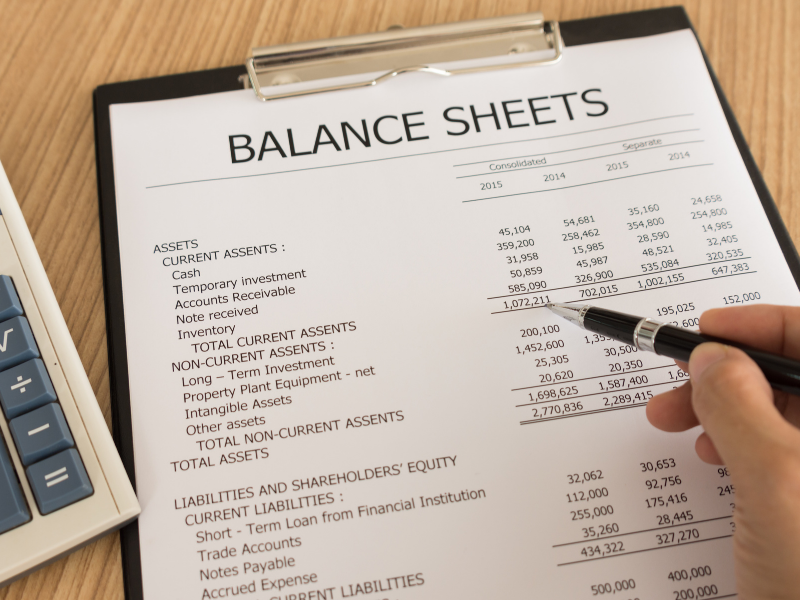
A snapshot of what your business owns and owes at a specific point in time. If the P&L is a movie, the balance sheet is a single freeze‑frame.
What it tells you
- What you own (assets)
- What you owe (liabilities)
- What’s left for you and your shareholders (equity)
Key pieces
- Assets: cash in the bank, accounts receivable (invoices you’ve issued), inventory, equipment, deposits you’ve paid.
- Liabilities: suppliers you owe, credit cards, loans, tax owed, payroll liabilities.
- Equity: founder capital, retained profits, shares issued, any accumulated losses.
As a founder, use it to:
- See whether you’re building real assets or just cycling cash.
- See if your business is liquid - is it able to pay for its short term liabilities as they fall due (from it short term assets).
- Check if your debt level is sensible relative to your size and stage.
- Spot red flags like huge tax liabilities, maxed‑out credit cards or negative equity.
- Show investors your financial position isn’t built on scary liabilities.
A quick exercise: look at your last balance sheet and ask yourself three questions:
- If all customers paid what they owe, how much cash would we have?
- If all suppliers demanded payment today, could we pay them?
- If we shut down tomorrow, what would be left after paying everyone else?
That’s the lens investors are using when they look at your balance sheet.
3. Cash flow statement
What it is
A view of how cash actually moves in and out of the business, split into:
- Operating cash flow – from normal business operations
- Investing cash flow – buying/selling assets, equipment, etc.
- Financing cash flow – loans, equity raises, repayments
If the P&L is “how profitable we are on paper”, the cash flow statement is “what actually happened in the bank account”.
What it tells you
- Are we generating or burning cash from day‑to‑day operations?
- How long is our runway if nothing changes?
- Are we spending heavily on long‑term assets or repaying debt?
- How dependent are we on external funding to stay alive?
You can be “profitable” on your income statement and still be days away from a cash crisis. I’ve seen it more times than I’d like – especially with service businesses and project‑based work.
Your must‑knows
- Monthly net cash burn – net cash out per month.
- Cash runway – months of cash at your current burn.
- Big swings – any unusual big ups or downs in cash between months, and why.
Investors will ask, “What’s your monthly burn and runway?” You want to answer this calmly, with numbers you understand and trust. Saying “I’ll check with my accountant” doesn’t inspire confidence.
Practical tip
Even if you don’t have a perfect formal cash flow statement yet, you can start with a simple spreadsheet:
Opening cash
+ Cash in (invoices actually paid, not just issued)
– Cash out (salaries, rent, tools, taxes, etc.)
= Closing cash
Then add a simple forecast for the next 6–12 months. This won’t be perfect – but it will be a lot better than flying blind.
4. Aged receivables & payables (where cash gets stuck)
These financial reports are critical for founders because they show where cash is being held up.
- Aged receivables: who owes you money, and how long those invoices have been outstanding.
- Aged payables: who you owe, and how long you’ve owed them.
Why this matters
- If customers treat you like a bank (paying in 60–90 days while you pay suppliers in 7–30), you will constantly be running out of cash, even if you’re technically profitable.
- Weak working capital discipline is a red flag for investors and a major source of founder stress. It suggests a lack of control and follow‑through.
You don’t need to become obsessed, but you should know:
- Your average collection period – how long customers take to pay.
- Which large invoices are late and what you’re doing about them.
- Which suppliers you’re consistently paying late and why.
Also: watch for revenue leakage
There’s another, quieter risk: work done that hasn’t been invoiced at all. If your team has delivered work but no invoice was raised, that revenue:
- isn’t in your P&L,
- isn’t in your receivables, and
- definitely isn’t in your bank account.
This is revenue leakage – and I see it a lot in service businesses, agencies and consulting‑heavy startups.
A simple monthly habit:
- Pull a list of all active projects/clients.
- For each one, ask: “What have we delivered this month?”
- Check: “Have we invoiced for all of that?”
- Fix any gaps immediately.
Revenue leakage doesn’t just make your numbers look weaker than reality – it erodes your profitability and it also tells investors your internal controls are loose. Closing this gap can sometimes improve your numbers more than any new sales effort.
5. KPI summary / founder dashboard
The last report in the KPI summary/founder dashboard. Investors love seeing that you run the business off a simple dashboard, not just emotion and instinct.
This is your “at a glance” view – usually a one‑pager or a couple of charts.
Typical founder KPIs:
- Monthly recurring revenue (MRR) or monthly revenue
- Gross margin %
- Operating margin % or net margin %
- Monthly burn and runway
- CAC and LTV (if you’re in SaaS or subscription)
- Any other metric that truly drives your model (e.g., active users, churn, average order value)

You want to be able to say: “Here’s how we’ve been trending over the last 6–12 months, and here’s what we’ve learned.”
One simple chart that shows the last 6–12 months of these metrics, plus your commentary, will instantly level up an investor meeting. It shows you’re not just seeing numbers once a year at tax time – you’re actively managing your business finances and this a positive sign for potential investors.
Founders often ask: “How many KPIs is enough?”
My rule of thumb: 5–7 well‑chosen metrics you look at regularly are worth more than 25 metrics you ignore.
How to get ready before your next investor meeting
If all of this feels like a lot, here’s the good news: you don’t need to build everything from scratch before your next conversation. Start with a simple prep checklist.
Step 1: Get the core statements/reports clean
- Make sure your latest P&L, balance sheet and cash flow are up to date and consistent.
- Ask your bookkeeper/accountant to send aged receivables and aged payables reports.
- Do a quick sweep for unbilled work and fix any obvious revenue leakage.
If something is messy or incomplete, it’s almost always better to acknowledge that and explain what you’re doing about it than to pretend everything is perfect.
Step 2: Build your founder dashboard
- Create a one‑pager with your 5–7 key KPIs.
- Include simple trends for the last 6–12 months, not just one month’s numbers.
- Add 3–5 bullet points of your commentary: what went well, what didn’t, what you’re changing.
This doesn’t need to be beautifully designed – a clean spreadsheet or Google Doc is fine for now. You can always turn it into a nicer chart later.
Step 3: Practice your story out loud
This is the step most founders skip.
- Practice explaining each statement out loud in plain language, as if you were talking to a smart friend who doesn’t know your business.
- For every big number or movement, ask yourself: “So what? What does this mean for us?”
- If there’s a weak spot (for example, negative margins or short runway), prepare a calm, honest explanation and a plan.
You don’t have to know every accounting rule. You do need to know your own story.
Investors are far more forgiving of imperfect numbers than they are of founders who don’t understand their numbers.
Next step for you
If you’d like a practical way to apply this, I’ve created a simple “Investor‑Ready Finance Checklist for Founders” that walks you through exactly what to review before sharing your numbers – including examples of what investors look for and where founders often trip up.
You can grab it here: Access the Investor-Ready Checklist.
Use the checklist alongside this post, and the next time someone says “send us your numbers”, you’ll know exactly what that means – and you’ll be ready.