Cashflow vs Profit: Why Your Agency Can Be Profitable and Still Run Out of Cash
You checked the P&L. Revenue is up. Retainers are holding. On paper, the agency is profitable. Then you opened your bank account the week before payroll. If you've ever felt that gap — this post explains exactly why it happens and what to do about it.

By Nyasha Madavo, Chartered Accountant & Governance Professional | Capital & Checks
You check your profit and loss statement and it looks great. Revenue is up. Retainers are holding. New project work came in this month.
On paper, the agency is doing well.
Then you open your bank account the week before payroll.
And wonder where all the money went.
This is the most common — and most privately anguishing — financial experience for agency founders at your revenue stage. You billed $180K last month. Your P&L shows a profit. And yet you are watching the account with one eye, doing mental arithmetic on outstanding invoices, and hoping nothing unexpected hits before Friday.
You are not imagining things. You are not mismanaging. And you are absolutely not alone.
What you are experiencing is the gap between profit and cash — and it is one of the most misunderstood financial dynamics in founder-led service businesses. It is also one of the most dangerous, because most founders trust the profit number and ignore the warning signs until the pressure is already on.
Here is the truth your bookkeeper probably has not explained to you: profit and cash flow are not the same thing. Understanding the difference is not a finance lesson for finance people. It is a survival skill for every agency founder — and once you see it, you cannot unsee it.
Why Profitable Agencies Run Out of Cash
This might be the most important sentence in this entire post: 82% of small business failures are caused by cash flow problems — not by a lack of profitability.

That statistic comes from a U.S. Bank study that has been cited extensively across the financial and small business community, and it holds across industries and markets. Read it again. The majority of businesses that fail are not failing because they are unprofitable. They are failing because they run out of cash while waiting for money that is technically theirs.
That is the trap. And it catches agency founders who are doing everything right — winning clients, renewing retainers, delivering excellent work, growing revenue — because the problem is not performance. The problem is timing.
Profit lives on paper. Cash lives in your bank account.
Profit is calculated using what accountants call accrual accounting. Under this method, revenue is recorded when it is earned — when you complete a project, deliver a campaign, or issue an invoice — not when the money actually arrives in your account. Expenses are recorded when they are incurred, not when you pay them.
This is useful for understanding the long-term health of your business model. But it creates a very specific problem: your profit and loss statement can show a healthy surplus while your bank account is almost empty.
Here is how it plays out in an agency. Imagine you run a $1.2M digital marketing agency. In March, you deliver two campaigns and close out a large brand project — $85,000 in total invoices issued. Your costs for March — salaries, freelancers, tools, rent — come to $62,000. Your P&L shows a $23,000 profit for the month.
But two of those clients are on 60-day payment terms. The brand project client has a 45-day net. None of that $85,000 has landed yet. Meanwhile, payroll runs at the end of the month, rent hits on the 1st, and your software stack auto-renews regardless.
Your P&L says you made money. Your bank account disagrees.
That is not a bookkeeping error. That is the structural cash flow gap — and it is especially pronounced in agency businesses where the work is front-loaded and the payment is delayed.

The Four Most Common Reasons the Gap Appears in Agency Businesses
Understanding why profit and cash diverge gives you the ability to spot the problem before it becomes a crisis. Here are the four patterns that show up most consistently in founder-led agency businesses.
1. Late-Paying Clients and Long Payment Terms
This is the most common culprit — and in agency work, it is baked into the model. You do the work, send the invoice, and wait. In the US, 56% of small businesses currently have unpaid invoices, with each business owed an average of $17,500 in outstanding payments. In the UK, the picture is more stark: 90% of businesses experienced late payments in 2025, with the average delay now standing at 32 days — on top of whatever payment terms were already agreed. Late payments now cost the UK economy nearly £11 billion a year, contributing to approximately 14,000 business closures annually.
For agencies, this problem is compounded by relationship dynamics. You value the client. The retainer matters. So when an invoice goes 15 days overdue, you hesitate to chase aggressively. And every day that money sits unpaid is a day you are effectively lending your client cash — interest free — while still covering your own costs.
2. Growth That Outruns Cash — Overtrading
This one catches agency founders off guard because it happens precisely when things seem to be going well. You land a significant new retainer or a substantial project, hire to fulfil it, bring in a specialist contractor, and then discover the client pays on 60- or 90-day terms. Your costs are real and immediate. Your revenue is real but delayed.
This is called overtrading — when growth accelerates faster than the cash needed to sustain it. One entrepreneur described it directly: "One of the toughest years my company had was when we doubled sales and almost went broke. We were building things two months in advance and getting the money from sales six months late." You can be winning on every commercial measure — growing revenue, adding headcount, increasing retainer value — and still hit a wall because you do not have the working capital to bridge the gap between spending and receiving.
3. Scope Creep That Eats Margin Without Showing Up in Cash
This is the agency-specific version of a large, often invisible cost. Scope creep — the extra hours, deliverables, and expanded briefs you absorb without billing — destroys margin and cash in two ways. First, it means you are spending more time to deliver the work than the project or retainer was priced for. If you use contractors or other variable-cost resources, that extra time shows up as additional expense in your P&L and directly erodes profit. If your salaried team or you as the founder absorb the work, the P&L may still look fine, but your true margin and capacity are lower than the numbers suggest.
Second, because you never invoice for that extra work, you never collect it. The cash implication is invisible until you look at margin by client — and most agency founders don’t run that calculation in real time.
Your P&L may show the project or retainer as profitable. But if 20% of the actual hours worked went unbilled — whether through contractors you paid for or salaried staff you burned out — the real picture is very different.
4. Tax Obligations That Arrive as a Shock
Founder-led agencies are particularly vulnerable here. Quarterly estimated tax payments — federal income tax, self-employment tax, state obligations — can arrive as jarring cash demands if they have not been set aside throughout the year. The same applies to payroll tax deposits and any state-level compliance costs.
The pattern that leads to real cash problems: the business is profitable on paper, the founder draws from the business throughout the year, and then Q1 arrives with a tax bill that was never reserved for. The profit was real. The cash to cover the obligation has already been spent.
The Two Reports You Should Be Running Together
There are two financial statements that every agency founder needs to understand — and use together, not just one in isolation.
The Profit and Loss (P&L) statement answers: Is this business model working? Are we making more than we spend over time? It is the long-view lens. It tells you whether the business is viable. Most founders read this one.
The Cash Flow Statement answers: Where did the money actually go? Do we have enough cash to operate right now? It is the short-view survival lens. It tells you whether the business can make payroll next Friday. Most founders ignore this one.
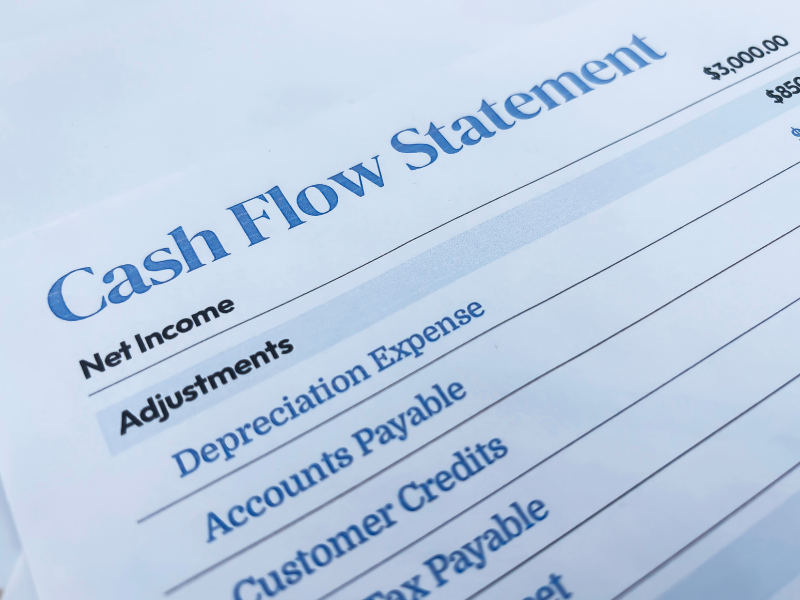
Profitable agencies that fail do so because their founders watch the P&L closely and never look at the cash flow statement. The P&L flatters. The cash flow statement tells you the truth about your week, your month, and your ability to make decisions from a position of confidence rather than panic.
5 Moves That Put You Back in Control
The good news: most cash flow problems are manageable if you see them coming. The agencies that get into serious trouble are almost always the ones that got surprised. Here is where to start.
1. Invoice Immediately — Without Exception
Every day you delay sending an invoice is another day you extend your client's payment window. In agency work, it is easy to delay invoicing while you wait for final approval, wrap up a deliverable, or simply get caught in delivery mode. Stop doing that. Invoice the moment work is complete — or better, invoice in advance where your contract allows it.
Make sure every invoice is compliant with your client's accounts payable requirements to avoid unnecessary rejections or delays. Use software that sends automated payment reminders at 7, 14, and 30 days. Small businesses that use integrated payment tools on their invoices get paid an average of 15 days faster than those that do not. It may feel uncomfortable to follow up — do it anyway. That is your money.
2. Restructure Your Payment Terms Before the Next Project Starts
Not every client will accept tighter payment terms, but many will — especially if you address it before work begins rather than after. Moving clients from net 60 to net 30 does not require a difficult conversation. It requires building it into your proposal and Statement of Work as the default.

Consider adding a deposit requirement — 30–50% upfront for project work is increasingly standard in professional services. For ongoing retainers, monthly billing in advance (rather than in arrears) is entirely reasonable and eliminates the timing problem almost entirely for that portion of your revenue. A small early-payment discount — 2% for payment within 10 days — can also accelerate settlement on larger invoices without significant cost.
3. Know Your Cash Conversion Cycle
Your cash conversion cycle is the time between when you spend cash to deliver your work and when you actually receive cash from the client. In a typical agency, this gap is 45–90 days. The longer that gap, the more cash reserve you need to bridge it.
Most agency founders are running a longer conversion cycle than they realise. In the US, 55% of invoices are currently overdue, with 33% more than a month late. If your standard terms are net 30 and your average client pays in 45 days, your real cash conversion cycle is significantly longer than you have planned for. Track it. Name it. Build your working capital strategy around what is actually happening, not what your payment terms say should happen.
4. Run a Monthly Cash Flow Forecast — Even a Simple One
A cash flow forecast does not need to be a complex financial model. At its core, it is a month-by-month view of what cash you expect to come in, what cash you expect to go out, and what that leaves in your account. For an agency, this means mapping your expected retainer and project invoice receipts, your payroll and contractor costs, and your fixed overheads across the next 3–4 months.
It does not need to be perfect. It needs to be honest and updated monthly. Research suggests that monthly cash flow forecasting prevents a significant share of cash shortfalls by identifying problems 60 to 90 days before they become critical. The forecast is not about prediction — it is about seeing the problem before it is a crisis, while you still have time to act.
5. Build a Cash Reserve — Even From a Standing Start
Agency businesses generally need two to three months of operating expenses held in accessible reserve to bridge the natural gap between when profit is earned and when cash is collected. That number might feel out of reach right now, especially if you are operating without much buffer.
Start smaller. Even setting aside 5% of each receipt into a separate account begins to build the cushion. Cash reserves are not idle money. They are the difference between making a good decision calmly and making a panicked one under pressure — staying in a retainer you should exit, cutting a team member you should have kept, or missing an opportunity because your cash position left no room to move.
The Mindset Shift That Changes Everything
The most important shift you can make as an agency founder is this: stop managing your business from your P&L alone and start managing it from your cash position.
Your P&L tells you how the story is going to end. Your cash flow tells you whether you are going to survive long enough to get there.
Both matter. But in the day-to-day, week-to-week reality of running a founder-led agency — cash is the metric that keeps the lights on, pays your team, and gives you the breathing room to make good decisions rather than reactive ones.
Agency founders who understand this distinction do not just avoid the crisis. They build a business that investors, lenders, and high-value prospects can trust — because they can explain their numbers clearly, they know where pressure is likely to come from, and they are not surprised by their own bank account. That combination — craft plus financial clarity — is what turns a good agency into one that is genuinely fundable, scalable, and worth something beyond the clients in it right now.

What to Do Next
If this post made you realise you have been watching your profit number while your cash flow has been quietly building pressure underneath, that is a useful insight — and a completely fixable one.
Start with a simple monthly cash flow forecast. Map your expected retainer and project receipts, your payroll and contractor costs, and your fixed overheads across the next three months. Do it this week, before the month gets away from you.
Download the free Founder Cash Flow Template below. It gives you a practical structure to track your cash inflows, outflows, and closing balance each month — built for agency and service businesses, no finance degree required.
Download the free Founder Cash Flow Template →
Access free cashflow template
And if you want to go further — to make sure your numbers are fully investor-ready and that you understand all five key financial statements your business should be tracking — the Investor-Ready Finance Checklist for Founders covers exactly that.
Get the Investor-Ready Finance Checklist here →
Access finance checklist link
Nyasha Madavo is a Chartered Accountant and Governance Professional, and the founder of Capital & Checks — practical finance and governance content for founder-led businesses.