Biggest Cash Leaks in Founder-Led Businesses: Why Unpaid Invoices Hurt Cash Flow
Unpaid invoices silently drain cash from founder-led businesses. Discover how to spot this cash leak early, chase payments professionally and build invoice habits that protect your working capital.

Most founder-led businesses do not struggle because they cannot generate revenue. They struggle because too much cash leaks out of the business quietly, repeatedly, and often without being noticed soon enough.
One of the biggest leaks is money that has already been earned, invoiced, and still has not landed in the bank.
One of the biggest cash leaks in a founder-led business is revenue that has been billed, but not collected.
That is what makes unpaid invoices so dangerous. The sale has happened. The work is complete. The invoice has been sent. On paper, the revenue looks real. But until the cash is actually received, your business cannot use it to pay salaries, cover suppliers, fund marketing, or create breathing room for you as the founder.
According to the 2025 Intuit QuickBooks Small Business Late Payments Report, 56% of small businesses are currently owed money from unpaid invoices, and the average amount owed is $17,500. Nearly half of those overdue invoices are already more than 30 days late.
So if you have ever thought, “We had a busy month — why does cash still feel tight?” there is a good chance receivables are part of the answer.
Late-paying clients draining your cash?
The Founder’s Receivables Playbook gives you a practical system to tighten invoicing, follow up professionally, and collect faster — without the awkwardness.
→ Get the Founder’s Receivables Playbook here: Access Playbook
Revenue Is Not the Same as Cash
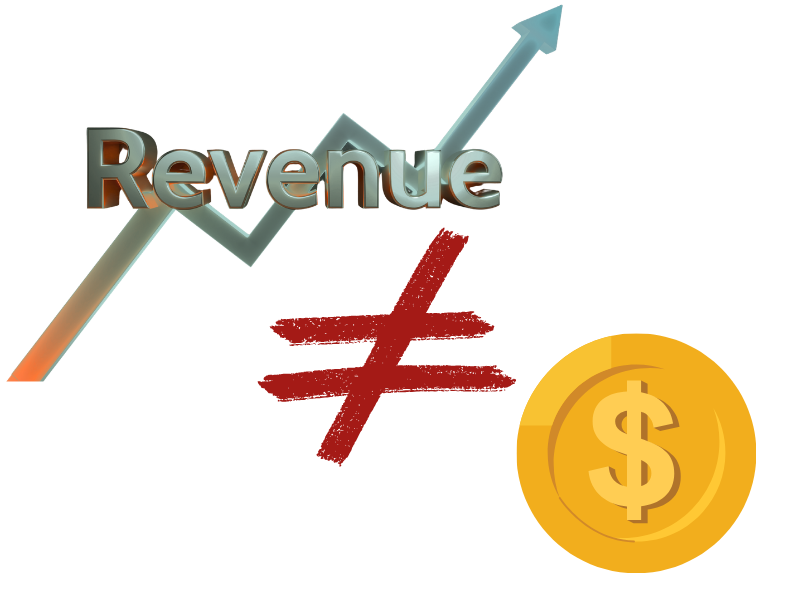
One of the most important financial shifts a founder can make is understanding that revenue and cash are not the same thing.
Your Profit & Loss statement records revenue when it is earned, not when it is paid. That means you can look profitable on paper while still feeling cash-strapped in real life.
This is where unpaid invoices become a real leak.
You may have mentally counted the money as “done” because the work has been delivered and the invoice has gone out. But if payment takes 30, 45, or 60 days to arrive, your business still has to survive the delay.
In effect, you are funding your client’s slow payment cycle.
That delay creates pressure everywhere else:
- You postpone paying yourself.
- You hesitate on hiring.
- You delay investing in growth.
- You stretch outgoing payments.
- You make decisions from anxiety instead of clarity.
A profitable month can still feel financially stressful if the cash has not actually been collected.
Late payments do not just slow cash. They distort decision-making.
Why Unpaid Invoices Are One of the Biggest Cash Leaks
Unpaid invoices are especially damaging because they sit in a blind spot. Unlike an obvious overspend, they do not always feel like a leak at first. Nothing visibly left the business. But cash that should already be in your account is still missing, which creates the same operational strain as an expense.
The effect compounds fast:
- Working capital gets squeezed.
- Time gets lost to chasing and follow-ups.
- Reliance on overdrafts, credit cards, or short-term borrowing increases.
- Founder stress rises because every decision feels tighter than it should.
The pressure from late payment is not a small-business edge case. In the US, small businesses report being owed an average of $17,500 in unpaid invoices, and more than half of B2B invoices are paid late. In the UK, late payments are consistently cited as a leading cause of small business cash flow problems and business closures. European Commission data cited in payment-terms guidance shows that 25% of business insolvencies are caused by not being paid on time.
That is why unpaid invoices are not just an admin problem. They are a business stability and sustainability problem.
The Hidden Cost Is Bigger Than the Invoice
The value of the invoice is only one part of the problem.
The hidden cost of late payment includes your time, your attention, and your momentum. Small businesses spend hours every month chasing overdue invoices, checking whether they were received, following up with clients, and trying to understand where payment got stuck.
That is time that could have gone into sales, delivery, customer service, or strategy.
There is also the emotional cost. Many founders delay follow-up because they do not want to sound pushy, awkward, or desperate. So the reminder gets postponed. The invoice ages further. And what could have been a simple, professional check-in becomes a heavier conversation weeks later.
Silence is not a collections strategy. It is just a slower cash leak.
This is how unpaid invoices become more than an isolated issue. They start draining energy from the business.
Most Late Payment Problems Start Before the Invoice Is Sent
One of the biggest mistakes founders make is assuming the receivables problem starts once an invoice becomes overdue.
In reality, many late-payment problems begin much earlier.
They begin when nobody checks whether a purchase order is required. They begin when timesheets need approval but the process was never clarified. They begin when the invoice is sent to the wrong contact. They begin when the client has a monthly cutoff for invoice processing and the submission misses the run.
Many “late payment” problems are actually setup problems.
A client may intend to pay you and still delay payment because:
- the bill-to entity is wrong,
- the PO is missing,
- the tax details are incomplete,
- supporting documents were not attached,
- or the invoice missed the payment cycle.
That is why a receivables system must start before the invoice is even issued.
Before work begins, founders should know:
- whether a purchase order is required,
- whether timesheets need approval,
- who in Accounts Payable can be contacted directly,
- what the customer’s payment cycle looks like,
- and what exact details must appear on the invoice to avoid rejection.
That work may feel operational, but it protects cash.
Want a simple system for this?
The Founder’s Receivables Playbook includes:
- an invoicing setup checklist,
- a five-stage collections sequence,
- ready-to-send email templates,
- and a monthly receivables ritual.
→ Download it here: Access Playbook
Why a Collections Sequence Matters
Even if your invoice setup is strong, a second leak appears when follow-up is inconsistent.
A founder sends the invoice, then waits. A week passes. Then another. Then they finally send a soft reminder once the invoice is already overdue. At that point, the tone feels heavier and the relationship feels more strained than it needed to be.
This is why a standard collections sequence matters.
Instead of improvising every time, create a simple rhythm:
- a pre-due reminder,
- a due-date check-in,
- a first overdue email,
- a second overdue follow-up,
- and a final notice when needed.
The value is not just faster payment. It is consistency. Your business looks more professional, your client sees that invoices are actively tracked, and you remove the emotion from chasing.
Most founders do not need to become more aggressive. They need to become more systematic.
Most founders do not need to chase harder. They need a better receivables system.
What to Fix First If Cash Feels Tight
If your business feels cash-constrained right now, start by looking at unpaid invoices before jumping into more complicated financial fixes.
Ask yourself:
- How much have we billed in the last 90 days?
- How much of that has actually been collected?
- What is our oldest unpaid invoice?
- Which clients repeatedly pay late?
- Are we missing invoicing requirements or payment-cycle deadlines?
- Do we have a standard follow-up process?
These answers will tell you very quickly whether receivables are one of your biggest leaks.
Then focus on the fastest improvements:
1. Tighten payment terms
Net 14 is often more protective than automatically defaulting to Net 30.
2. Invoice faster and more accurately
Send invoices immediately, with the right PO, billing entity, tax information, and backup documentation where needed.
3. Review receivables monthly
Check ageing, send follow-ups, and update expected payment dates before the issue compounds.
These are simple actions, but they unlock money you have already earned. That is why they often improve cash flow faster than many growth tactics.
The Founder Advantage
The good news is that receivables are one of the most fixable cash leaks in a founder-led business.
You cannot control every client. You cannot control the economy. But you can control how your invoicing process is set up, how early you follow up, how clearly you communicate, and how consistently you track overdue payments.
That matters because better systems create calmer leadership.
When you know what is outstanding, what is overdue, what is at risk, and what action needs to happen next, your numbers become easier to trust. You stop hoping. You start managing.
And that is the real benefit: not just getting paid faster, but running the business with more confidence and less financial noise.
If outstanding invoices are quietly draining your business, do not keep guessing.
The Founder’s Receivables Playbook gives you a founder-friendly system to invoice properly, follow up consistently, and stop receivables from becoming a recurring cash leak.
You’ll get:
- a five-stage collections sequence,
- ready-to-send email templates,
- a client invoicing checklist,
- and a simple monthly receivables ritual.
Price: $27
→ Get the Founder’s Receivables Playbook here: Access Now